Category: Cleaning & Decluttering

  • 12 Things to Declutter From Your Home This Weekend

    12 Things to Declutter From Your Home This Weekend

    Decluttering doesn’t have to mean spending an entire weekend sorting through everything you own. Sometimes the best way to make progress is to focus on a few things that are easy to identify, remove, and let go.

    A couple of hours spent clearing unnecessary items can make your home feel noticeably lighter and easier to manage. Better yet, you don’t need to tackle every room or organize everything perfectly to see a difference.

    If you have some time this weekend, start with these 12 common sources of clutter. Work through the list at your own pace, skip anything that doesn’t apply to your home, and focus on making progress rather than trying to finish everything at once.
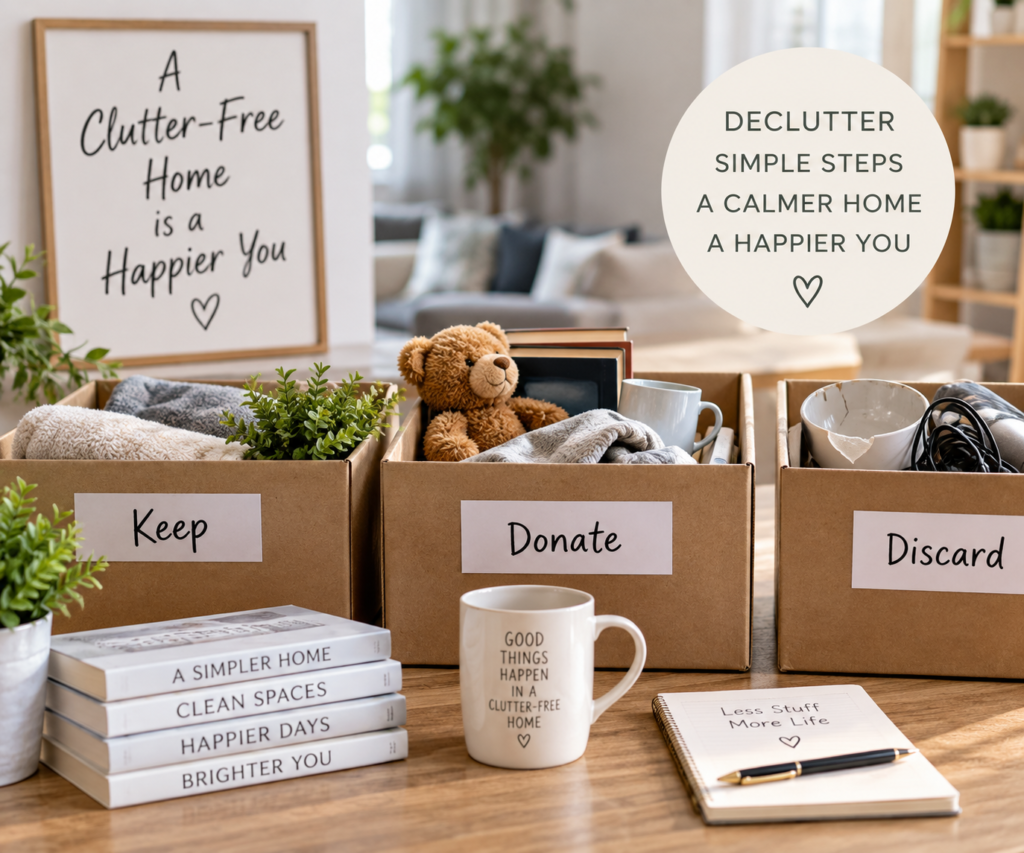
    Decluttering boxes labeled Keep, Donate, and Discard in an organized home.

    1. Expired Food and Pantry Items

    Start with your pantry, refrigerator, and freezer. Check expiration dates and remove food that is expired, stale, or unlikely to be used. Don’t forget spices, condiments, baking supplies, and items hiding at the back of shelves.

    As you work, group similar foods together so you can see what you already have. Clearing out unusable items creates more room for the groceries you actually use and makes meal planning easier.

    2. Clothes You No Longer Wear

    Look through your closet and drawers for clothing that no longer fits, hasn’t been worn in a long time, or simply doesn’t suit your lifestyle anymore. Set aside pieces that are still in good condition for donation.

    You don’t have to empty your entire closet. Start with one category, such as shirts, pants, shoes, or jackets. Working in smaller sections keeps the process manageable and makes decisions easier.

    3. Old Toiletries and Bathroom Products

    Bathroom cabinets and drawers can quickly fill with expired toiletries, nearly empty bottles, old cosmetics, and products you tried but never liked. Go through one area at a time and remove anything expired, empty, or no longer used.

    Keep the products you use regularly within easy reach and store backups together. With fewer unnecessary items taking up space, your bathroom will be easier to organize and maintain.

    4. Old Papers, Mail, and Receipts

    Paper clutter can build up quickly on countertops, desks, and tables. Go through old mail, receipts, flyers, and paperwork, and recycle or shred anything you no longer need.

    Keep important documents together in one designated place so they’re easy to find when needed. Taking a few minutes to sort incoming paperwork regularly can prevent piles from building up again.

    5. Kitchen Gadgets You Never Use

    Kitchen drawers and cabinets often contain gadgets, utensils, and small appliances that haven’t been used in months or even years. Look for duplicates, broken items, and tools that no longer serve a useful purpose.

    Keep the items you actually use and consider donating anything that’s still in good condition. Clearing unnecessary kitchen tools creates more room for everyday essentials and makes cabinets and drawers easier to organize.

    6. Broken or Unused Household Items

    Walk through your home and look for items that are broken, damaged, or simply no longer used. This might include old décor, worn-out linens, unused electronics, or household items you’ve been keeping “just in case.”

    Dispose of broken items responsibly and donate usable things you no longer need. Removing these forgotten belongings can free up valuable storage space and make your home feel less cluttered.
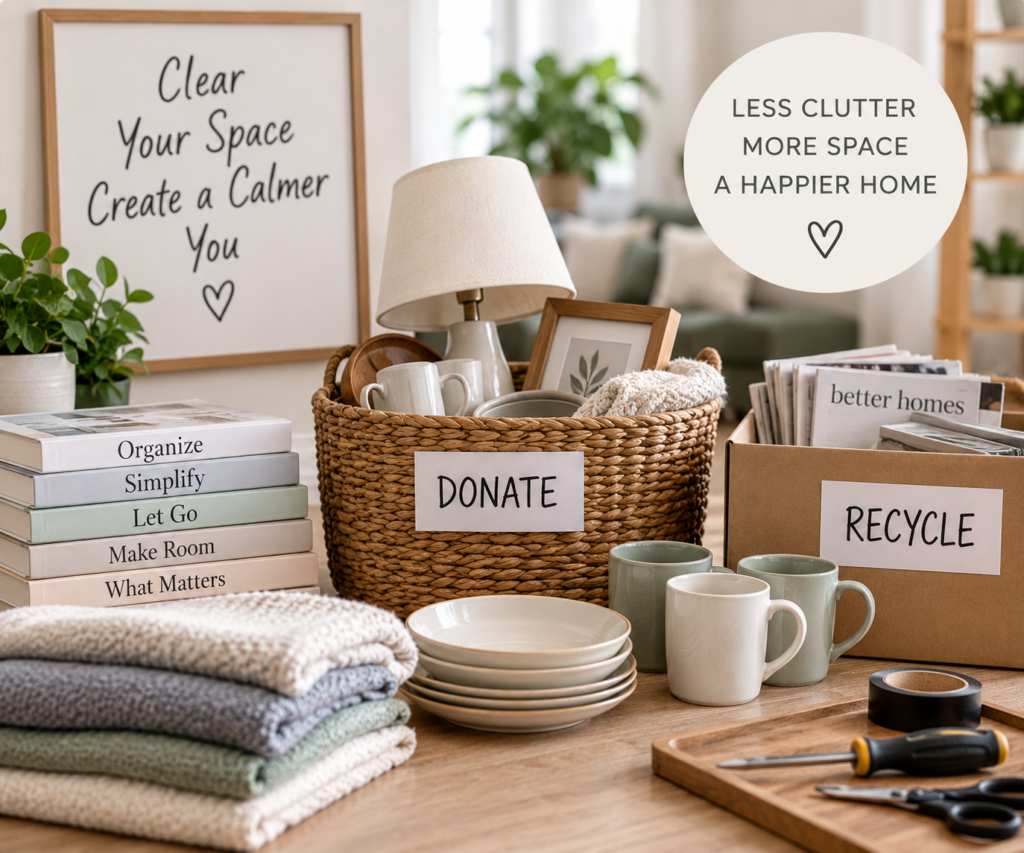
    Decluttering household items sorted for donation and recycling in an organized home.

    7. Books and Magazines You Won’t Read Again

    Books and magazines can slowly accumulate on shelves, coffee tables, and nightstands. Go through your collection and set aside anything you’ve already read, no longer enjoy, or realistically don’t plan to read.

    Keep the books you truly value and consider donating the rest. Recycle outdated magazines and catalogs. A smaller collection makes shelves easier to organize and leaves more room for the things you actually enjoy.

    8. Extra Mugs, Cups, and Water Bottles

    Mugs, cups, and reusable water bottles have a way of multiplying over time. Check your cabinets for duplicates, damaged pieces, promotional cups, and anything you rarely reach for.

    Keep your favorites and enough extras for your household and guests. Donating the rest can free up valuable cabinet space and make it easier to find what you need every day.

    9. Toys, Games, and Hobby Supplies No Longer Used

    Toys, games, craft supplies, and hobby materials can take up a surprising amount of space when they’re no longer being used. Look for items that are broken, incomplete, outgrown, or tied to hobbies your household no longer enjoys.

    Donate usable items and dispose of anything damaged or incomplete. Keeping only the activities your household currently enjoys makes these areas easier to organize and maintain.

    10. Duplicate Cleaning Supplies

    Cleaning products often end up scattered under sinks, in closets, and throughout different rooms. Gather them together and look for duplicates, nearly empty containers, and products you no longer use.

    Use up what you already have before buying replacements, and safely dispose of anything that has expired or is no longer usable. Keeping your cleaning supplies together makes it easier to see what you have and prevents unnecessary purchases.

    11. Old Electronics and Cords

    Old phones, chargers, cables, headphones, and small electronics can accumulate quickly because we’re often unsure whether we might need them again. Go through your collection and identify anything that no longer works or belongs to a device you no longer own.

    Keep the cords and electronics you still use and recycle unwanted electronics through an appropriate electronics recycling program. Labeling the cords you keep can also make them much easier to identify later.

    12. Decorations You No Longer Love

    Decorations should help make your home feel comfortable and personal, but over time it’s easy to accumulate items that no longer fit your style. Look around your rooms and storage areas for décor you no longer enjoy displaying.

    Keep the pieces that you genuinely love and consider donating items that are still in good condition. Removing decorations, you no longer enjoy can make your home feel less crowded while allowing your favorite pieces to stand out.
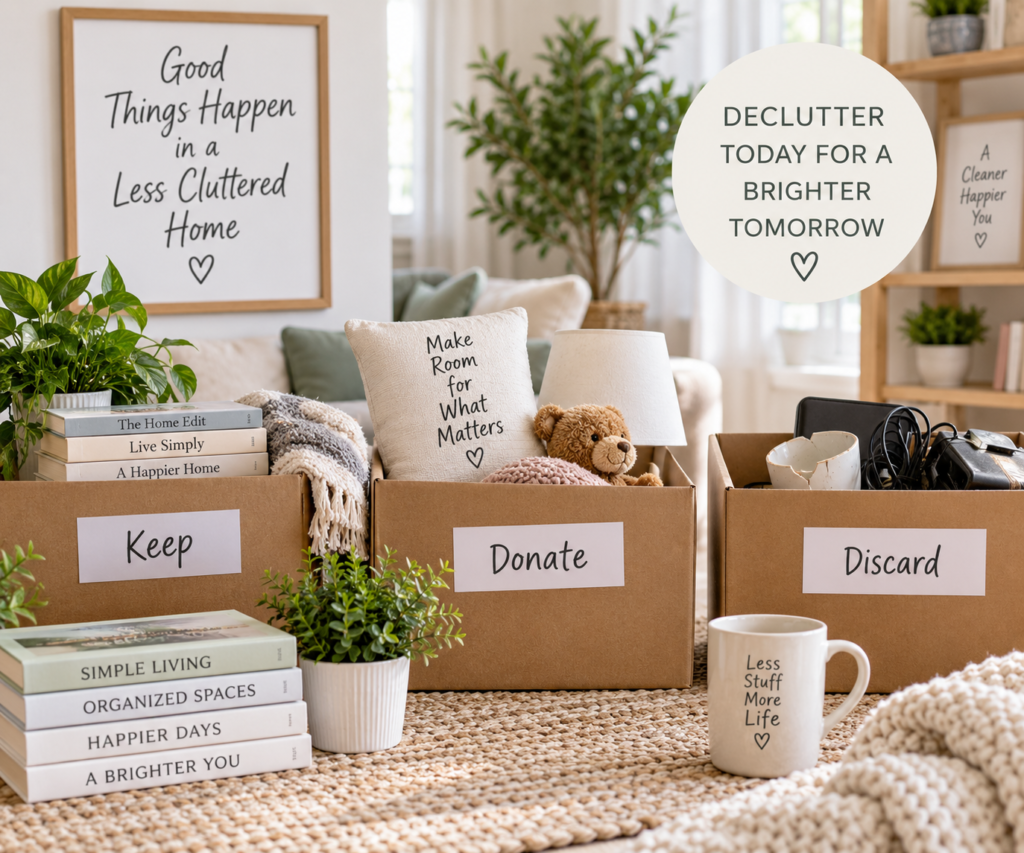
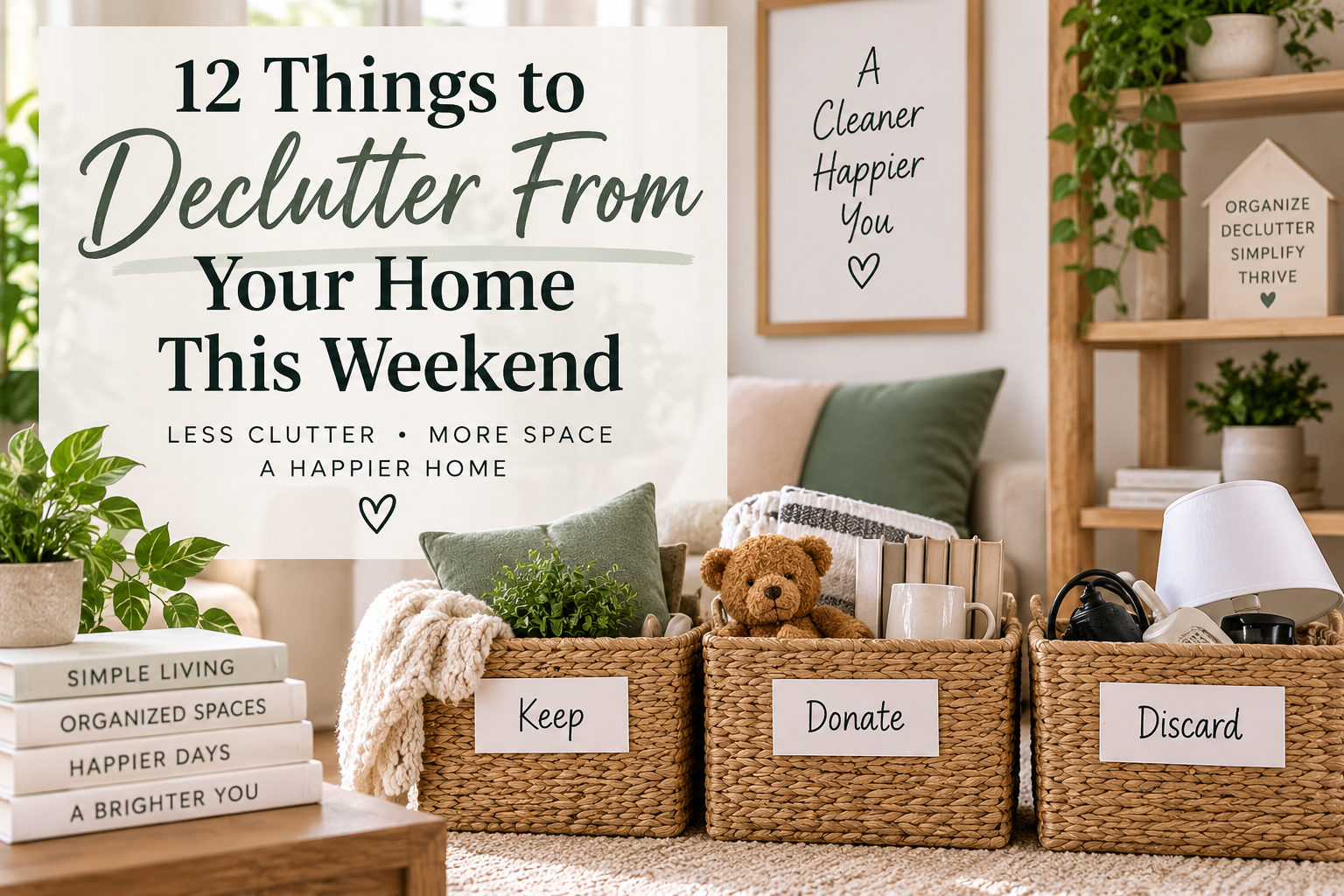
    Decluttering boxes labeled Keep, Donate, and Discard in an organized living room.

    A Little Decluttering Can Make a Big Difference

    You don’t have to completely reorganize your home to make it feel calmer and easier to manage. Removing even a handful of things you no longer need can create noticeable breathing room.

    The key is to keep the process manageable. Choose a few items or one small area at a time, make your decisions, and then move on. Small decluttering sessions are much easier to fit into everyday life than waiting for the perfect weekend to tackle everything.

    Once you’ve worked through these 12 categories, take a moment to enjoy the extra space you’ve created. A less cluttered home isn’t about having fewer things just for the sake of it—it’s about making more room for the things you actually use and enjoy.

    Ready to keep going? Explore our How to Declutter Your Home Room by Room Without Feeling Overwhelmed guide for a simple room-by-room approach to creating a calmer, more organized home.
  • How to Declutter Your Home Room by Room Without Feeling Overwhelmed

    How to Declutter Your Home Room by Room Without Feeling Overwhelmed

    A cluttered home can make everyday routines feel harder than they need to be. When belongings begin piling up on countertops, tables, floors, and inside closets, even simple tasks like finding what you need or putting things away can become frustrating.

    The good news is that you don’t have to declutter your entire home in one weekend. Working room by room allows you to make steady progress without turning the process into another overwhelming project.

    The goal isn’t to create a perfectly organized home. It’s to remove what you no longer need, give the things you use a practical place to belong, and create spaces that are easier to maintain.

    This room-by-room approach will help you decide where to begin, what to focus on, and how to make meaningful progress one manageable space at a time.

    Calm organized living room with baskets and simple storage solutions for a clutter-free home

    1. Start Small Before Tackling an Entire Room

    One of the easiest ways to become overwhelmed is to pull everything out at once. Instead, choose one small area you can realistically finish, such as a countertop, one drawer, a single shelf, or a small section of a closet.

    Remove anything that clearly doesn’t belong, throw away obvious trash, and set aside items you no longer use. Finishing one small area gives you a visible result and makes it easier to keep going.

    2. Declutter the Kitchen

    Start with the areas that tend to collect the most clutter, such as countertops, utensil drawers, food-storage cabinets, and the pantry. Remove duplicate items, expired food, and kitchen tools or appliances you rarely use.

    Keep frequently used items within easy reach and move occasional-use items to less convenient storage areas. The goal is to make everyday cooking and cleanup easier—not to keep every kitchen item you own on hand.

    3. Declutter the Living Room

    The living room often becomes a collection point for items that belong somewhere else. Start by removing dishes, mail, toys, clothing, and anything else that has migrated into the room.

    Next, look at books, magazines, decorations, electronics, and other items that permanently live there. Keep the things you use or enjoy, and remove anything that is simply taking up space. Give frequently used items a designated place so the room is easier to reset at the end of the day.

    4. Declutter the Bedroom

    A calmer bedroom starts with reducing visible clutter. Clear nightstands, dressers, chairs, and the floor before moving on to drawers and closets.

    Go through clothing and accessories and set aside anything that no longer fits, hasn’t been worn in a long time, or you simply don’t enjoy using anymore. Keep everyday items easy to reach and avoid using chairs or other surfaces as temporary storage.

    5. Declutter the Bathroom

    Bathrooms can become crowded with toiletries, cosmetics, medications, towels, and partially used products. Work through one drawer, cabinet, or shelf at a time and remove empty containers, expired products, and items you no longer use.

    Group similar items together so you can easily see what you already have. Keep everyday essentials within reach while storing backups and less frequently used products in a separate area.

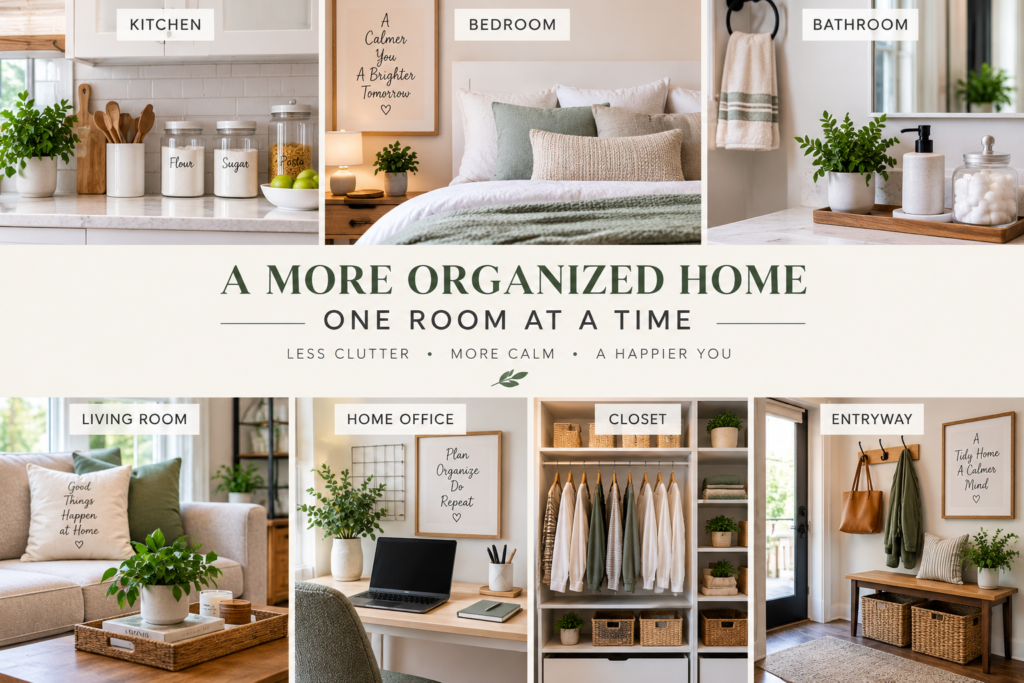
    Organized kitchen, bedroom, bathroom, living room, home office, closet, and entryway

    6. Declutter the Home Office

    Paperwork, mail, office supplies, and miscellaneous items can quickly take over a home office or workspace. Start by clearing the desk and removing anything that doesn’t belong in the area.

    Sort through papers and keep only what you actually need. File important documents, recycle unnecessary paperwork, and give frequently used supplies a designated place. A clear workspace can make it much easier to stay focused and productive.

    7. Declutter Closets

    Closets often become storage areas for things we aren’t sure what to do with. Work through one section at a time rather than emptying the entire closet at once.

    Remove clothing, shoes, and accessories you no longer wear or use. Group similar items together and keep everyday essentials within easy reach. Use higher shelves and less accessible areas for seasonal or occasional-use items.

    8. Declutter Entryways and Drop Zones

    Entryways can quickly collect shoes, bags, mail, keys, and other everyday items. Start by removing anything that doesn’t need to stay near the door.

    Give frequently used items a simple place to land. Hooks, baskets, trays, or small storage areas can help keep everyday essentials contained and make it easier to prevent clutter from spreading into the rest of the home.

    9. Declutter Storage Areas

    Garages, utility closets, basements, and other storage areas can easily become holding places for things you no longer use. Instead of trying to tackle the entire space at once, choose one shelf, bin, or section to work through at a time.

    Remove broken items, obvious trash, and things you no longer need. Group the remaining items by purpose and keep frequently used belongings easy to access. Clearly defined storage areas make it easier to find what you need and prevent clutter from building up again.

    10. Create a Simple Decluttering Routine

    Decluttering becomes much easier when it becomes part of your regular routine. Rather than waiting until your home feels overwhelming again, spend a few minutes each week putting misplaced items away and removing things you no longer need.

    Pay attention to the areas where clutter tends to return first. A quick weekly reset can help keep countertops, tables, closets, and other frequently used spaces under control without requiring another major decluttering project.

    Organized, clutter-free home with plants and decor illustrating the benefits of creating a calmer home one space at a time.

    A Less Cluttered Home Starts One Space at a Time

    Decluttering your entire home doesn’t have to happen all at once. Small, consistent changes can make a noticeable difference in how your home looks, feels, and functions.

    Focus on creating spaces that work for your everyday life rather than trying to make everything perfect. When the things you use have a practical place to belong, keeping your home organized becomes much easier.

    Start with one room, one drawer, or even one shelf. Every space you simplify is another step toward creating a calmer, more manageable home.

    Ready to organize the spaces you’ve decluttered? Explore our 25 Amazon Home Organization Finds That Make Everyday Life Easier.