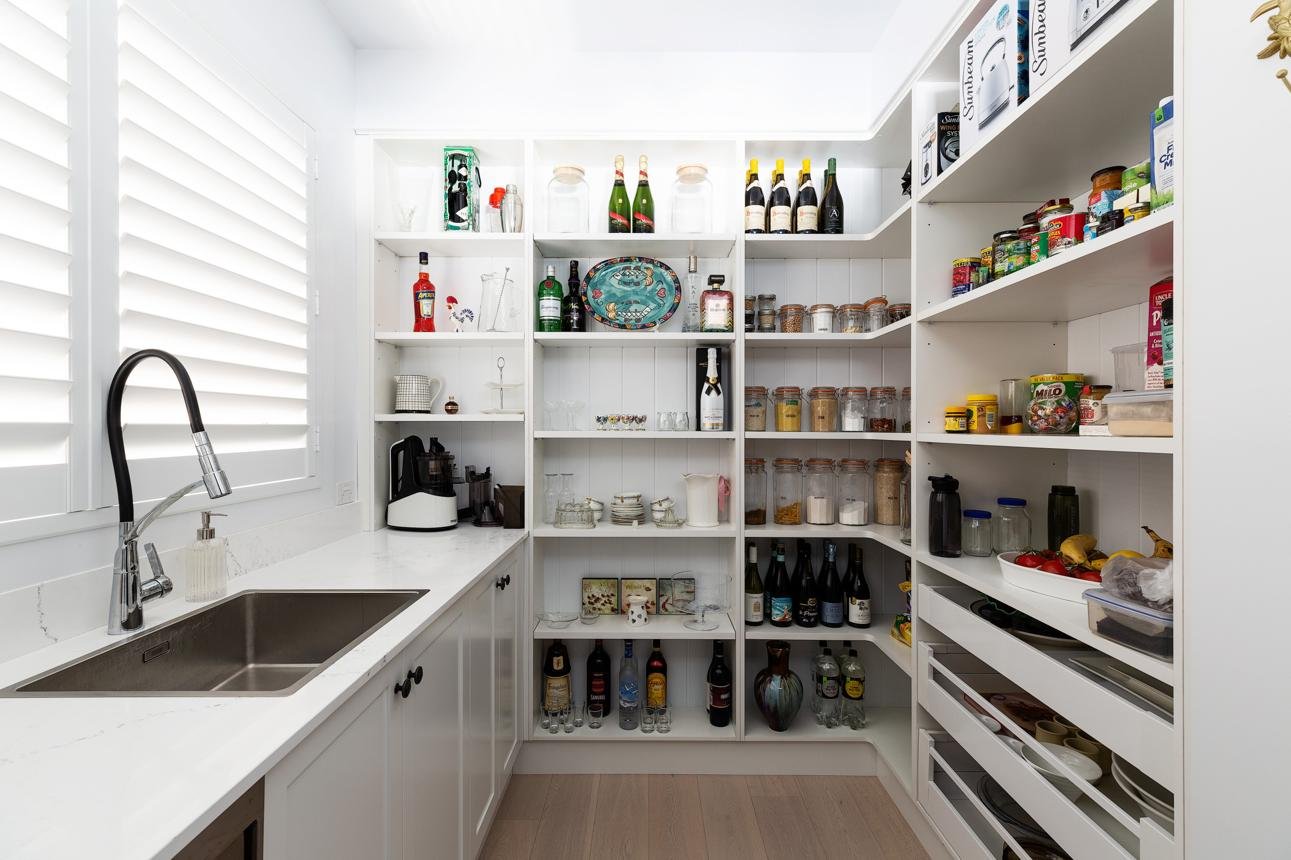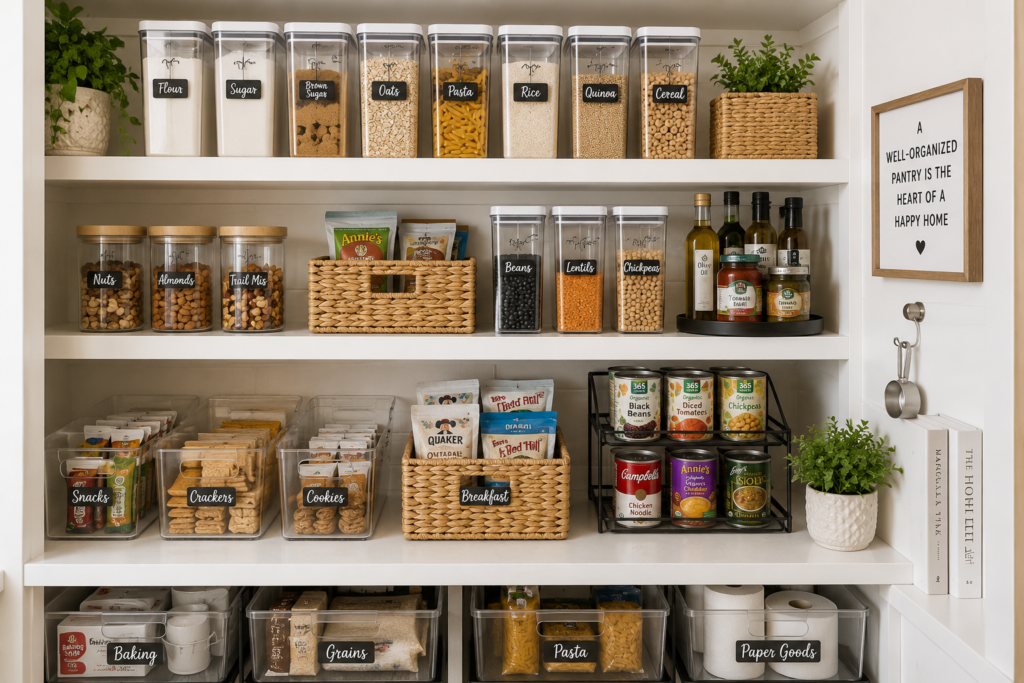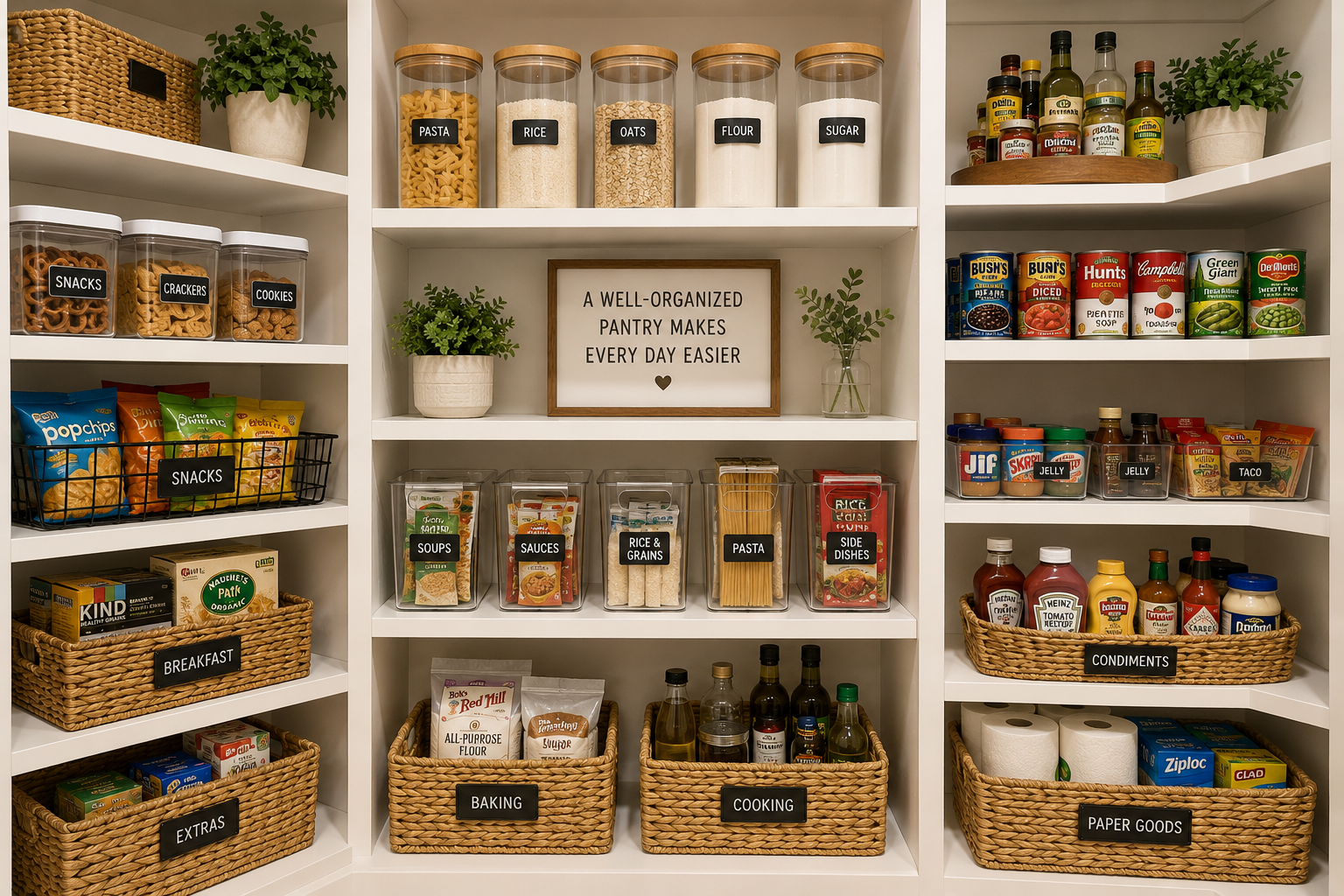
An organized pantry can make everyday routines easier, from preparing meals to putting groceries away. But creating a pantry that works well doesn’t require a complete makeover or a collection of expensive storage products.
The key is to create a simple system that makes it easy to see what you have, find what you need, and put everything back where it belongs.
Whether you have a walk-in pantry, a small cabinet, or just a few kitchen shelves, these seven simple steps will help you create a more organized and functional pantry—and keep it that way.
Step 1: Empty the Pantry and Start Fresh
Before organizing anything, remove everything from your pantry or cabinets. Starting with an empty space makes it easier to see exactly what you have and gives you a chance to clean shelves before putting items back.
As you remove items, place similar foods together so you can begin seeing natural categories such as canned goods, snacks, baking supplies, breakfast foods, and pantry staples.
Step 2: Check Expiration Dates and Remove What You Don’t Need
Before returning anything to the pantry, check expiration and best-by dates. Dispose of food that is no longer safe to use, and set aside unopened items your household is unlikely to use for donation if appropriate.
This is also a good time to combine duplicate items and make note of foods you already have. Reducing unnecessary clutter gives you more usable space and makes the next steps much easier.
Step 3: Group Similar Items Together
Organizing your pantry by category makes it easier to find what you need and helps prevent buying duplicates. Keep similar items together rather than placing groceries wherever there happens to be an open spot.
For example, you might create groups for snacks, canned foods, pasta and grains, baking supplies, breakfast items, sauces and condiments, and everyday cooking essentials.
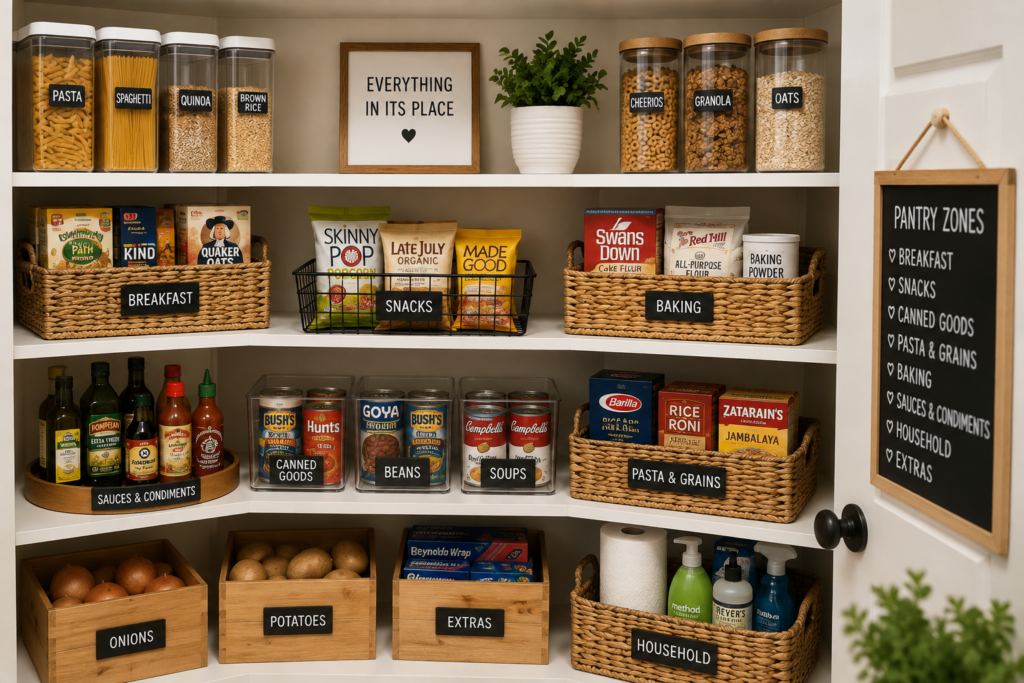
Step 4: Create Pantry Zones
Once your items are grouped, assign each category a specific area of the pantry. These designated zones make it easier for everyone in the household to know where things belong.
Place frequently used foods in easy-to-reach areas, while less frequently used items can go on higher or lower shelves. If you have children, consider keeping appropriate snacks on a shelf they can reach easily.
Step 5: Make the Most of Your Shelf Space
Take a look at the height and depth of each shelf before deciding where everything should go. Place taller items where you have enough vertical clearance and keep smaller items where they won’t disappear behind larger containers.
Try to keep frequently used items visible and within reach. Items you use less often can be placed toward the back or on higher shelves. The goal is to use the available space efficiently without overcrowding it.
Step 6: Label Your Pantry Zones
Labels can make an organized pantry much easier to maintain because everyone knows exactly where items should be returned.
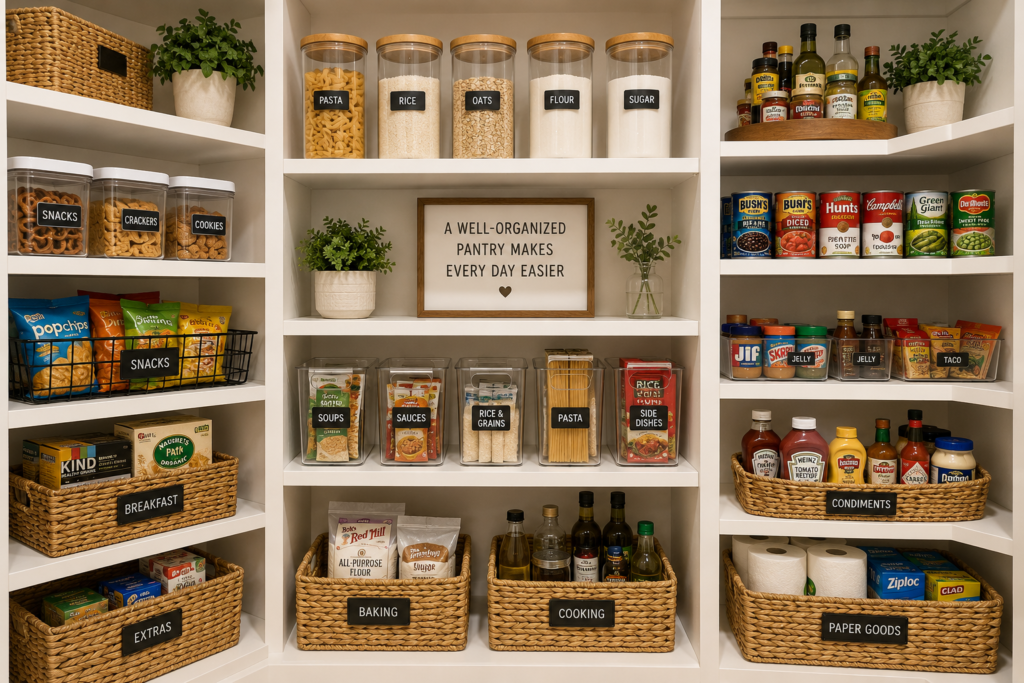
You can label shelves, baskets, bins, or individual containers depending on your setup. Keep the labels simple and easy to understand, using categories such as “Snacks,” “Breakfast,” “Baking,” or “Pasta & Grains.”
Step 7: Maintain Your Pantry with a Simple Routine
The best pantry organization system is one that is easy to maintain. Instead of waiting until the pantry becomes cluttered again, spend a few minutes each week putting misplaced items back in their proper zones and checking what needs to be used or restocked.
Before grocery shopping, take a quick look through the pantry and make a list based on what you actually need. This simple habit can help reduce duplicate purchases, food waste, and unnecessary clutter.
A More Organized Pantry Starts with a Simple System
A well-organized pantry doesn’t have to be perfect. What matters most is creating a system that works for your household and is simple enough to maintain over time.
Start with the space you have, give everything a logical place, and make small adjustments as your needs change. With these seven steps, your pantry can become easier to use, easier to maintain, and a more functional part of your everyday routine.